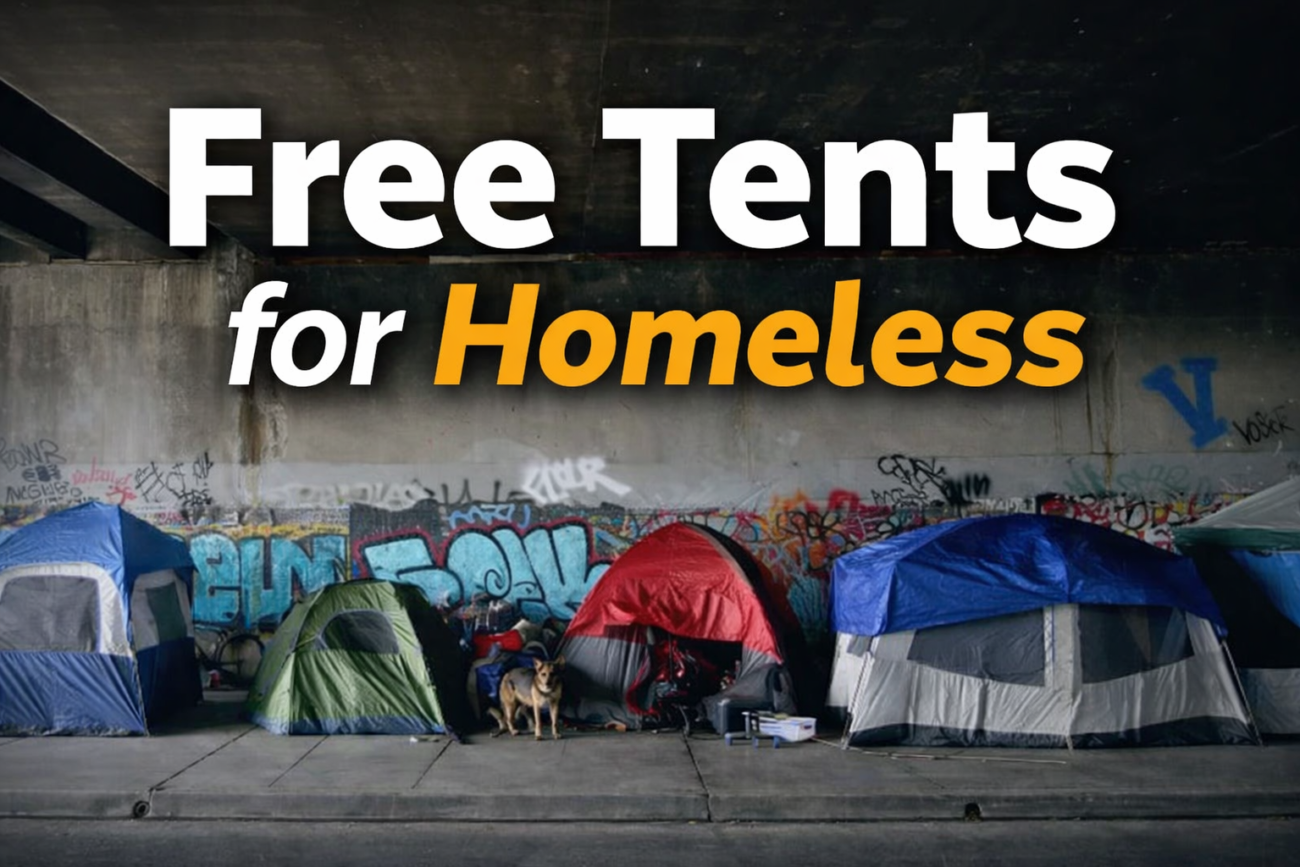
Generally, free tents are distributed throughout the United States via local street outreach groups, mutual aid networks, and faith-based charities, rather than through large federal programs or national retailers. Since local ordinances regarding outdoor camping vary considerably from city to city, these items are typically delivered directly to homeless individuals by outreach workers.
Also, nonprofit initiatives—such as The Tent Project—and community shelters distribute camping gear alongside food and clothing. In India, aid groups and housing boards focus primarily on permanent housing; however, NGOs and donation drives occasionally provide tents to serve as emergency shelter.
Who Can Qualify for Free Tent Assistance
Eligibility requirements vary depending on the organization offering the assistance. Most programs prioritize:
- Individuals currently experiencing homelessness
- Families with children
- Veterans
- Survivors of domestic violence
- Seniors
- People with disabilities
- People living in encampments
- Recently evicted households
- Disaster victims
Some charitable organizations require identification or proof of homelessness, while others distribute tents directly during community outreach events without requiring any documentation.
Local Organizations & Street Outreach Programs offer Free Tents
Mutual Aid Groups
Mutual aid groups are self-organized, volunteer-run networks that distribute survival supplies directly to people experiencing homelessness, bypassing the strict intake processes and requirements often mandated by traditional charities. Since they operate on community donations, they serve as a primary source for obtaining free, immediate outdoor living gear—such as tents, tarps, sleeping bags, and seasonal items.
You can use the Mutual Aid Hub Map to search your region for verified, active community support groups operating near you.
The Salvation Army’s Emergency Assistance Programs
The Salvation Army does not operate a nationwide program for distributing free tents intended for unsupervised outdoor camping. Since their primary mission focuses on relocating individuals into physical emergency shelters, transitional housing, or city-sanctioned “Safe Outdoor Spaces,” they rarely distribute tents directly to the general public.
However, it is occasionally possible to obtain emergency camping gear through specific Salvation Army channels, though this depends heavily on the specific city in question.
Local Community Outreach and Mobile Feeding Units
Rather than distributing tents from their main administrative offices, the Salvation Army employs street-level community outreach teams and mobile feeding units.
- When severe winter weather or extreme heat conditions arise, outreach workers drive vans directly to known encampments.
- Their primary focus is on distributing essential survival items: heavy blankets, winter coats, sleeping bags, hot meals, and personal hygiene kits.
- In select cities with large unsheltered populations, local corps (such as the Salvation Army in Bremerton, WA) explicitly stock and distribute donated tents and sleeping bags free of charge—strictly subject to availability through community donations. Authorized “Safe Outdoor Spaces”
In specific metropolitan areas, rather than simply providing a tent for use on public streets, The Salvation Army partners with municipal governments to manage regulated tent communities.
Managed Camps: Programs such as the one run by the Santa Cruz, CA Corps provide a physical site with capacity for up to 135 tents, while simultaneously offering 24-hour staff support, meals, showers, and laundry services.
All-Weather Tents: In cities like Denver/Aurora, federal funds have been allocated to construct temporary villages utilizing specialized ice-fishing tents (suitable for all weather conditions), situated in secure parking lots, to serve as a bridge toward permanent housing.
Note: Availability depends on local funding and weather-related emergencies. During winter storms or natural disasters, many Salvation Army locations intensify their support for outdoor survival.
Catholic Charities Housing Services
Like other major faith-based networks, Catholic Charities does not have a national policy or a standardized program for distributing free tents for recreational outdoor camping purposes. Rather than encouraging unsupervised street encampments, its primary institutional objective is to allocate resources toward prevention programs—such as HomeSafe (assistance with rent and utility payments to prevent eviction)—or to immediately relocate individuals into physical transitional housing facilities.
However, given that Catholic Charities is comprised of independent regional chapters, local exceptions do exist, as do initiatives referred to as “Safe Outdoor” camping programs.
In certain metropolitan areas with high homeless populations, Catholic Charities collaborates directly with municipal governments to manage safe and strictly regulated tent encampments, rather than distributing equipment haphazardly on sidewalks.
Tampa Hope: Managed by Catholic Charities, this expansive, supervised site houses over 100 pre-pitched tents situated within a fenced perimeter. Homeless adults are assigned a specific tent and receive three daily meals, on-site medical care, laundry services, and counseling.
Pinellas Hope: This pilot community was launched with 250 tents intended for emergency shelter, situated on land donated by the Church. Over time, the project evolved into a complex offering of community resource centers, access to running water, and structured programs designed to facilitate the transition into permanent housing.
Many of the chapters operate thrift stores to raise funds. If you meet with a Catholic Charities social worker for an initial assessment, you may request a voucher for material goods. Should a local resident have donated a used tent, sleeping bag, or tarp to the collection center, this voucher would allow you to retrieve that equipment from the thrift store completely free of charge.
Continuum of Care (CoC) Homeless Programs
The CoC (Continuum of Care) program is a regional planning framework funded by the U.S. Department of Housing and Urban Development (HUD) to distribute federal funds to non-profit organizations and local government entities. Since federal guidelines focus funding on Street Outreach, transitional housing, and permanent housing, the purchase of tents for individuals camping outdoors falls outside its primary scope of work.
Instead, a CoC acts as the “central gateway” for directing homeless individuals toward shelter through a system known as Coordinated Entry.
While HUD funds are rarely used to purchase tents directly—due to local municipal bans on camping—CoCs heavily fund Street Outreach teams.
- These specialized mobile teams visit encampments directly to build trust and conduct housing needs assessments.
- Outreach workers utilize flexible funds or secondary private donations to distribute basic safety and survival items, such as tarps, emergency blankets, sleeping bags, and survival gear.
The Orange Tent Project
The Orange Tent Project is a community-based non-profit organization (501(c)(3) status) that distributes and constructs sturdy, thermally insulated structures for homeless individuals, operating exclusively within the city of Chicago, Illinois.
Rather than providing standard nylon summer camping tents, this organization specifically utilizes insulated tents designed for ice fishing.
Since these structures are heavy and bulky, they are not simply handed out at a counter. The organization operates through a system of referrals and direct construction.
Referrals: Tents are allocated through direct referrals from partner non-profit organizations or via requests submitted directly by homeless individuals.
Assessment: The project’s operations team meets face-to-face with the candidate to determine whether an ice-fishing tent—which is large and stationary—fits their lifestyle; this is because individuals who are mobile and move around daily benefit more from lighter-weight survival gear.
Delivery and Assembly: Once the application is approved, teams of volunteers physically transport the tent and set it up in situ at a viable location.
If you or someone you know is experiencing homelessness in the Chicago area and needs to coordinate an assessment to access shelter, please contact the team directly via The Orange Tent Project’s contact email.
Immediate Assistance Hotlines
211 Homeless Assistance Hotline
By dialing 2-1-1, you connect with a local operator who can direct you to the locations of nearby shelters, day centers, and charitable organizations that provide emergency outdoor gear or hotel vouchers.
