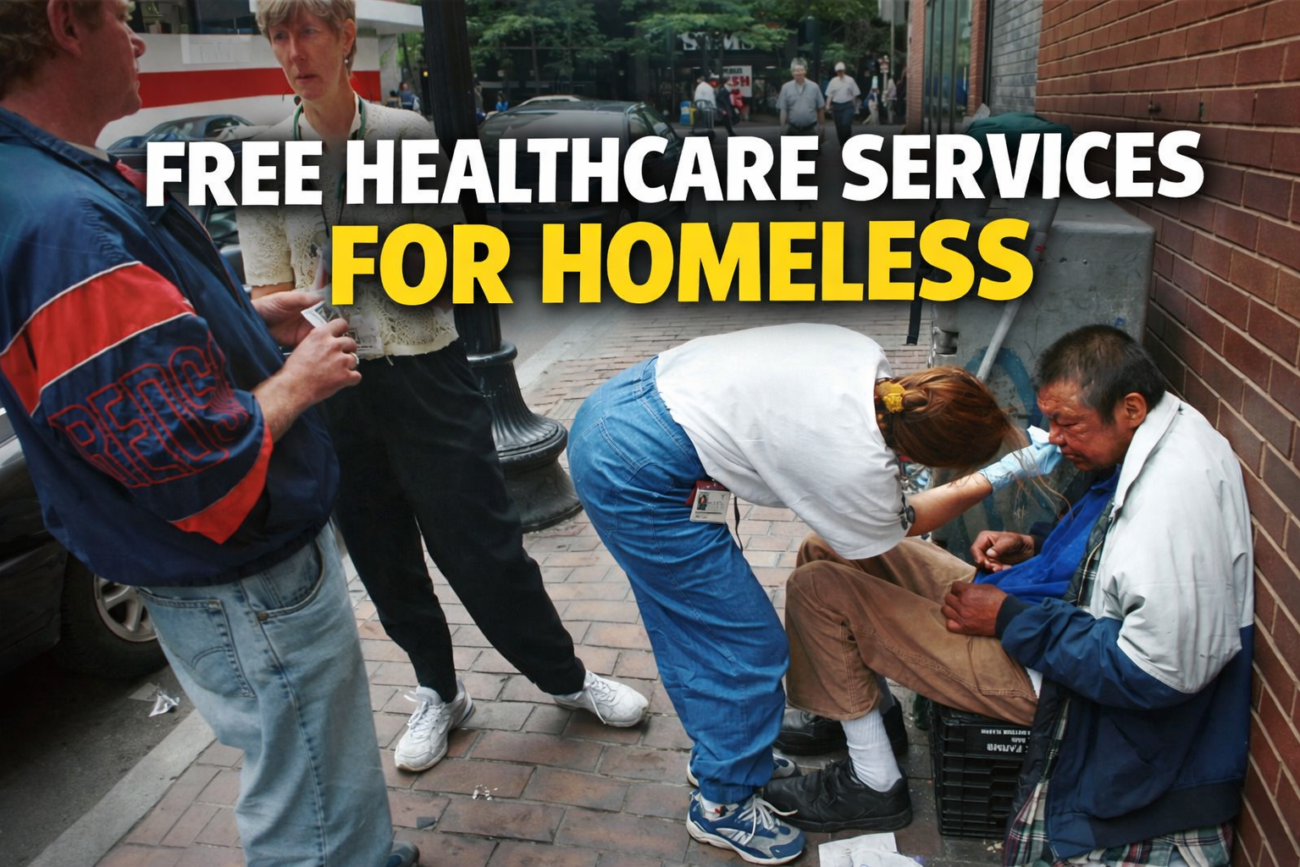
Homeless individuals can access free or low-cost medical care through specialized federal programs, community networks, and emergency services that do not require upfront payment. Federally funded clinics, mobile medical units, and state Medicaid programs constitute the primary avenues for obtaining essential medical, dental, and mental health care.
1. Dial 2-1-1 for Immediate Local Referrals
The fastest way to locate nearby medical resources is to dial 2-1-1 from any phone or visit 211.org.
Trained Operators: Available 24 hours a day, 7 days a week, to connect people with local resources.
Immediate Needs: Directs callers to emergency shelters, food banks, and nearby clinics.
No Cost: The calling service is completely free and confidential.
2. Visit Health Care for the Homeless (HCH) Clinics
Health Care for the Homeless (HCH) clinics are safety-net medical providers—federally funded and specifically designed to serve people experiencing homelessness. Authorized under Section 330(h) of the Public Health Service Act, they eliminate common barriers to care by offering medical, mental health, and substance use treatment services without requiring identification, health insurance, proof of address, or payment [nhchc.org].
No Prerequisites: Services are provided regardless of the patient’s insurance status or ability to pay.
No ID Required: Many of these clinics do not require identification, proof of income, or a permanent address to receive medical care.
Comprehensive Care: They offer routine physical exams, dental treatments, mental health counseling, and addiction treatment services.
How to Find a Clinic: You can use the HRSA’s “Find a Health Center” tool or consult the state directory on the National Health Care for the Homeless Council website.
3. Look for Mobile Medical Units and Street Medicine Teams
Mobile medical units and street medicine teams provide direct, free medical care to people experiencing homelessness, operating as roving clinics that extend beyond the walls of traditional medical centers. Across the United States, more than 150 organized street medicine programs go directly to where people live—including parks, underpasses, and informal settlements—in order to eliminate barriers such as a lack of transportation, identification requirements, and medical debt.
How Mobile Programs Work Across the U.S.
The “Street Medicine” Model: Healthcare providers carry medical supplies in backpacks or small vehicles to treat patients directly on the street. They focus on fostering long-term trust, treating chronic conditions, and healing wounds.
Mobile Medical Units (MMUs): These are large, custom-designed vans or recreational vehicles (RVs) equipped with exam tables, medication dispensaries, and, occasionally, compact dental stations. They park according to pre-established schedules at community soup kitchens, day centers, and informal settlements.
Expansion of Medicaid Funding: A crucial policy change, implemented by the Centers for Medicare & Medicaid Services (CMS), introduced a specific billing code for the “Place of Service” within the context of street medicine. This allows mobile teams to secure sustainable federal funding to treat Medicaid-eligible individuals directly on the street.
National Mobile Health Directories
If you need to coordinate mobile health services or check street medicine schedules in another U.S. city, use these centralized resources:
The Street Medicine Institute: Offers an interactive map that tracks affiliated community street medicine programs in major U.S. cities via its “Street Medicine Institute Locator.”
Mobile Health Map: A database dedicated to research and advocacy that indexes the locations, areas of specialization, and operating hours of hundreds of mobile health units nationwide through its “Mobile Health Map Directory.”
4. Enroll in Medicaid (Public Health Insurance)
You do not need to have housing, a permanent address, or a stable income to enroll in Medicaid. Federal guidelines explicitly protect the right of homeless individuals to access public health insurance; furthermore, there are no “open enrollment” periods, so you can apply at any time of the year. Given that navigating the system can be complicated without access to technology or an identity document, there are specific exceptions and assistance programs designed to simplify the enrollment process.
Step-by-Step Enrollment Pathways
The simplest way to enroll varies depending on the tools and support available to the applicant:
Option A: In Person with a Certified Navigator (Recommended)
Navigating the system on your own can lead to errors in documentation. Applicants can meet with a Certified Application Assister or a case manager, who will complete the digital application on their behalf.
Where to find them: They are available daily at local Department of Human Services (DHS) offices, community action agencies, health department clinics, and major homeless shelters.
Option B: By Phone
If an applicant has access to a working mobile phone or a shelter’s landline, calling the state Medicaid enrollment center directly allows them to complete a verbal application with a representative.
National Option: Call the U.S. Department of Health and Human Services at 1-877-696-6775 to find your state’s enrollment hotline.
Option C: Online
If access to a computer or tablet is available at a public library or a shelter, applications can be submitted directly through state portals or the federal Health Insurance Marketplace (HealthCare.gov).
5. Access to Shelter-Based and Charity Clinics
Many local homeless shelters and rescue missions operate medical clinics within their own facilities.
Shelter Clinics: These offer routine care—without the need for an appointment—to both shelter residents and people living on the street, right at the location where they eat or sleep.
Hospital Charity Care: Under federal law, non-profit hospitals are required to offer “charity care” programs. This means they must waive or apply significant discounts to medical bills for patients whose income falls below certain poverty thresholds.
6. Emergency Rooms (for life-threatening situations)
Under the Emergency Medical Treatment and Active Labor Act (EMTALA), all hospital emergency departments have a legal obligation to evaluate and stabilize anyone experiencing a medical emergency.
No Refusals: They must treat patients regardless of their ability to pay or lack of health insurance.
Best Practice: This resource should be reserved for true emergencies (e.g., severe chest pain, deep wounds, respiratory failure), as emergency rooms cannot provide ongoing treatment for chronic conditions.
