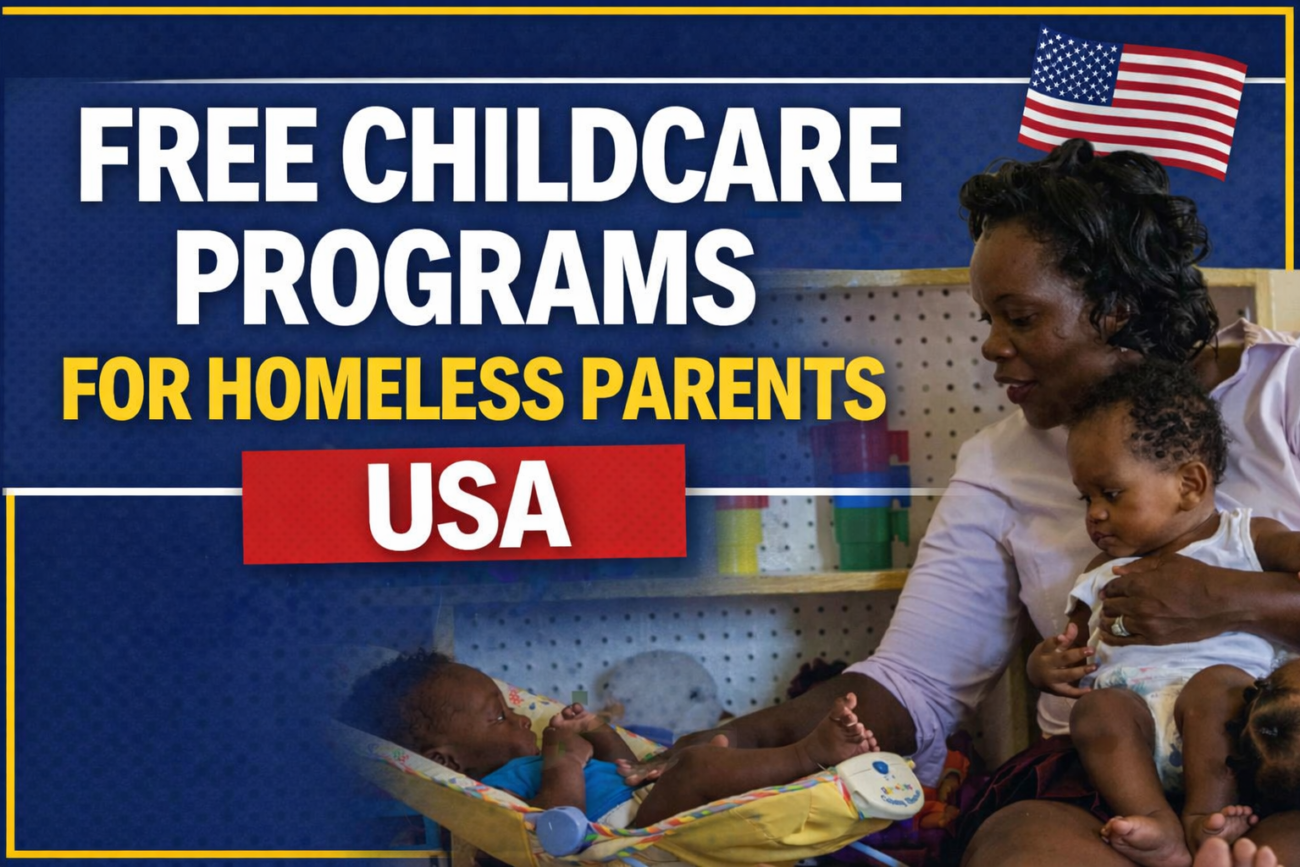
There are free child care programs for homeless parents—funded by federal, state, and non-profit initiatives—aimed at helping families stabilize while parents work, study, or search for housing. Federal and state laws specifically require that families experiencing homelessness receive enrollment priority, expedited placement, and exemptions from standard application procedures.
Government and State Programs
There are federally funded early childhood education and child care programs designed to support families experiencing homelessness, ensuring children have a stable environment while their parents secure permanent housing or employment.
Head Start and Early Head Start
Head Start and Early Head Start are free, federally funded early childhood development programs that prioritize families experiencing homelessness. Under federal law, children facing housing instability automatically qualify for enrollment—bypassing standard income verification requirements—which ensures immediate access to stable care, healthy meals, and medical resources.
Comprehensive services: Beyond free child care, both programs offer a comprehensive support network to help families stabilize their situations:
Nutrition: Children receive free, healthy breakfasts, lunches, and snacks on every day they attend the program.
Health screenings: The programs organize free dental, vision, hearing, and mental health screenings and help connect families with local clinics.
Family case management: Staff work directly with parents to help them find permanent housing, job opportunities, and continuing education options.
How to find a program and apply
Online locator: Use the official national Head Start center locator to find programs operating in your specific zip code or neighborhood.
Phone assistance: Call the Head Start helpline (toll-free: 1-866-763-6481, Monday through Friday) to speak with someone who can direct you to the nearest centers.
Direct contact: Once you locate a center, contact them directly. Ask to speak specifically with the Family Services Coordinator or the Homeless Liaison, as these staff members are trained to expedite applications for families in transition.
State Child Care Subsidies (CCDF / CCAP)
The federal government provides block grants to all states through the Child Care and Development Fund (CCDF) to help low-income families and those in transitional situations afford local child care services. These subsidies, administered by the states, pay authorized child care providers directly; this allows parents experiencing homelessness, participating in job training programs, or holding low-wage jobs to access child care for free or at a significantly reduced rate.
Protections for people experiencing homelessness under federal CCDF law
Federal regulations require state CCAP programs to eliminate immediate barriers to access for families experiencing housing instability:
Expedited enrollment and grace periods: Children must be enrolled immediately. States grant an extended grace period for submitting standard required documentation, such as birth certificates, immunization records, and proof of permanent address.
Co-payment waivers: While families enrolled in standard CCAP pay a small, tiered monthly co-payment, federal guidelines allow states to completely waive this fee for families experiencing homelessness, making child care services 100% free.
Priority status: When counties have limited funds and implement waiting lists for applications, families experiencing homelessness are typically placed at the top of the priority list to fill available openings.
Step-by-step instructions for applying to the program
Locate your county agency: The CCAP program is administered by your local county Department of Human Services. For example, families in the area can apply directly through the Arapahoe County Child Care Assistance Program, the Denver CCAP office, or the Adams County CCAP Hub.
Your application: You can apply online through your state’s portal—such as the Colorado PEAK application system. If you do not have internet access, you can print a paper application or request one in person at your county human services office.
Declare your housing situation: Be sure to check the box indicating “housing instability” or “homelessness” on the application. This alerts the county caseworker to waive immediate documentation requirements and check for available priority slots.
Choose a provider: Once your application is approved, you can choose any licensed center, preschool, or home-based child care provider that accepts state CCAP certificates.
Local Community and Non-Profit Child Care Centers
Across the United States, various national non-profit networks, charitable organizations, and community groups operate free or heavily subsidized child care programs specifically designed to support families experiencing housing instability. As non-profit, community-based entities, they often have more flexibility than rigid government agencies to immediately accommodate children whose parents are in crisis.
Family Promise (National Network)
Family Promise is one of the largest national non-profits dedicated exclusively to combating family homelessness. It has hundreds of local affiliates across the country.
Program: Local affiliates coordinate emergency shelters but also offer specialized day-stabilization centers.
Child Care Component: While parents use the day centers for job training, housing searches, or case management, Family Promise provides—either directly or in partnership with local centers—free, safe child care services.
How to Find Local Help: Use the Family Promise national affiliate portal to search by your current city or state.
Catholic Charities USA
As one of the largest charitable networks in the United States, Catholic Charities USA operates local family support centers in nearly every major diocese in the country.
Program: They manage specialized early childhood centers, family shelters, and parenting programs aimed at vulnerable households.
Priority for the Homeless: You do not need to be Catholic to access their services. Their licensed child care centers give absolute priority for spots to children coming from local shelters or transitional housing.
How to Find Local Help: Locate your nearest branch using the directory on the main Catholic Charities USA website.
Salvation Army (Lambuth Centers and Family Centers)
The Salvation Army operates numerous emergency shelters and family community centers across the country, integrating child care services directly into their housing assistance plans.
Program: Facilities such as the Lambuth Family Center and other similar regional shelters offer safe environments specifically designed for homeless families.
Childcare component: They often provide childcare programs on-site (no appointment necessary) or issue vouchers to cover preschool services at partner non-profit centers, allowing parents to leave their children in a safe environment while attending important appointments.
How to find local help: Contact a regional Salvation Army office or consult the Denver Housing and Homelessness Guide if you are in the Denver metropolitan area.
YMCA and Boys & Girls Clubs of America
Many local YMCA and Boys & Girls Club locations offer income-adjusted rates, reducing the cost of childcare to zero for families experiencing housing crises.
Program: They offer licensed early education centers, drop-in childcare services, and comprehensive before- and after-school activity programs for older children.
Crisis assistance: Most locations maintain a private “scholarship” or “financial assistance” fund—supported by community donations—to fully cover childcare costs for parents experiencing homelessness.
How to find local help: Go directly to the administrative office of a local YMCA or Boys & Girls Club and ask to speak with the program director about a fee waiver for emergency financial assistance.
Covenant House (For young parents)
If you are a young parent experiencing housing instability, know that Covenant House operates in major U.S. cities specifically to protect youth and young adults.
Program: Their transitional housing programs for mothers and children offer on-site childcare services at no cost.
Target population: Designed specifically for young mothers and fathers (generally up to age 21 or 24, depending on the state). How to find local help: Check their nationwide shelter locations directly on the Covenant House website.
How to search for available spots in real time
Since the capacity of non-profit organizations varies daily, the fastest way to locate available spots near your exact location is to use the national “FindHelp” search tool. Simply enter your current zip code, click the “Care” tab, and then select “Childcare” to see which local organizations offer funded emergency spots.
Immediate protections and rights
Under federal childcare regulations, parents experiencing homelessness have specific rights that eliminate common obstacles:
Grace periods: Children can enroll and begin attending childcare immediately, even if you do not have birth certificates, immunization records, or proof of address on hand.
Copayment waivers: Many states completely waive the usual “parent fee” or copayment for families without stable housing, making the childcare service 100% free.
