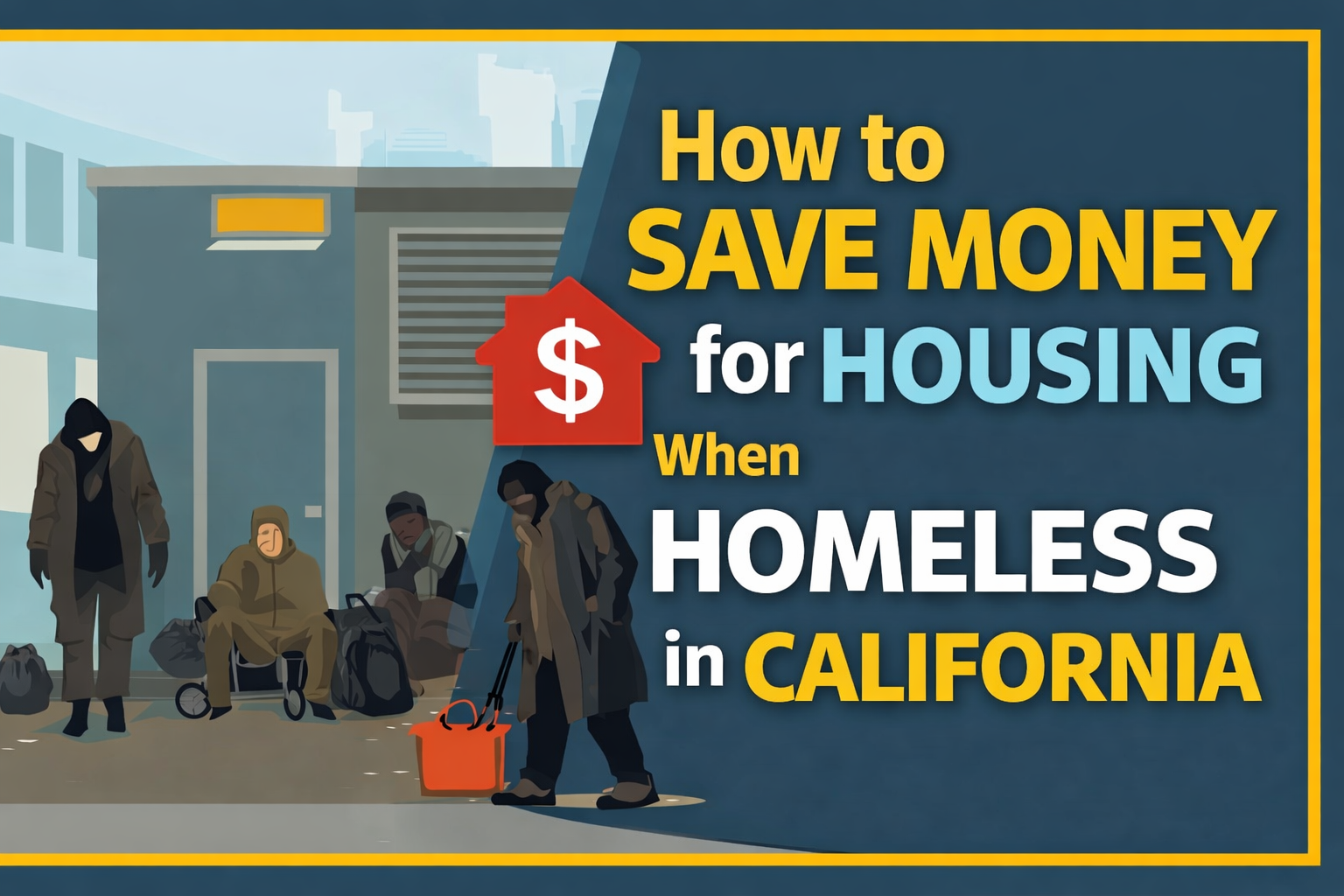
If you are homeless in California and want to save money for housing, the most effective strategies involve accessing state programs, using free local resources, and creating a small but consistent savings plan. California offers housing support programs like CalWORKs Housing Support, and you can also use 211 hotlines to connect with shelters, food, and financial assistance.
How to Save Money for Housing When Homeless in California?
Let’s know more about how you can save money for housing while facing homelessness in California.
Start With Free Basic Needs
The first step to saving money is to stop spending on things you can get for free. Many programs in California are designed to help people without housing.
Organizations like CalFresh provide monthly food benefits so you do not have to spend money on groceries. Food banks and local shelters also give free meals.
Healthcare is another major expense. Programs like Medi-Cal offer free or low-cost medical care. This helps you avoid large medical bills.
You can also use services from Continuum of Care programs in your area. These programs connect you with shelters, case workers, and financial help.
When your basic needs are covered, you can use more of your income for saving.
Reduce Daily Spending
When you have limited money, every small saving matters. The goal is to use every available free resource so that any income you have can go directly into savings.
Try to avoid paying for things that have free options. Use public libraries for internet, phone charging, and even job searches. Many libraries in California are safe places during the day.
Public transportation discounts are often available for low-income individuals. This can help you get to work or appointments without spending too much.
If you are staying in temporary housing or motels, try to find programs that offer vouchers or free shelter nights. This reduces your biggest daily cost.
Avoid spending on “convenience” meals. Use local food pantries, soup kitchens, and SNAP benefits to eliminate grocery costs.
Many day centers and faith-based organizations offer free showers and laundry services. Public libraries are also reliable spots for restrooms and water.
Save Small Amounts Consistently
Saving money while homeless is not about big deposits. It is about small, steady steps.
Even saving $1 to $5 a day can grow over time. For example, saving $3 a day can become around $90 in a month. That money can help with a security deposit or application fee later.
Keep your savings in a safe place. If possible, open a basic bank account or use a prepaid debit card. This protects your money better than carrying cash.
Find Income Opportunities
To save money, you need some form of income, even if it is small.
Look for day labor jobs, temporary work, or part-time roles. Many cities in California have job centers that help people find quick work.
You can also ask your case worker about programs that offer paid training or work assistance. Some housing programs include job support as part of their services. Also, many churches offer job training assistance, where they help you to get a temporary job, try to access these opportunities.
If you receive benefits like SSI or SSDI, try to set aside a small portion each month, even if it is a small amount.
Use Special Savings Programs
California offers programs that help low-income individuals save money faster.
One example is CalSavers. While it is mainly for retirement, it helps build the habit of saving regularly.
Some nonprofits also offer matched savings programs. This means they match the money you save, helping you reach your goal faster. Ask local shelters or housing agencies if such programs are available near you.
Set a Clear Housing Goal
Saving becomes easier when you know what you are saving for.
In California, moving into housing usually requires:
- First month’s rent
- Security deposit
- Application fees
This can add up to a large amount. Break this into smaller goals. For example, focus first on saving for the application fee, then the deposit.
Having a clear goal helps you stay motivated.
Work With a Case Manager
If you are connected to a shelter or program, ask for a case manager. They can help you create a savings plan and connect you to housing resources.
Programs under Housing First focus on getting people into housing quickly. These programs may cover part of your costs, reducing how much you need to save.
Leverage Specialized Housing Programs
Rather than saving the full cost of a house alone, connect with programs that provide immediate financial bridges.
Rapid Re-Housing: This program provides short-term rental assistance and move-in funds (like security deposits) to help you get into a home quickly while you build stability.
Emergency Housing Vouchers (EHV): These vouchers help individuals experiencing homelessness pay for private market housing.
Continuum of Care (CoC): This is the primary network for homeless services in the U.S. Contact your local CoC to get an assessment for permanent supportive housing or other subsidized options.
Protect Your Assets
If you have income, keep it in a bank account rather than carrying cash. If you don’t qualify for a standard account, some people use a safe deposit box for a small fee to prevent theft.
To keep your job and mental clarity, store non-essential belongings in a secure unit or with friends near where you spend your day. Carrying everything is exhausting and makes you a target for theft.
Store your ID, social security card, and birth certificate in a secure, waterproof place on your person or digitize them at a library. These are essential for applying for housing and jobs.
Things to Consider
High rents in California mean that saving takes longer; therefore, it may be necessary to turn to shared or transitional housing.
Scams targeting homeless individuals are common; work only with verified programs, such as county social services offices or the 211 service.
Unstable income can make saving difficult, so you should prioritize making consistent deposits—even if they are small amounts.
Coclusion
Being homeless in California is difficult, but saving money for housing remains possible with the right approach. Utilize available programs, cut unnecessary expenses, and save whatever you can—even if it is just a few dollars at a time.
